By Hanna Kay
"One sees clearly only with the heart. What is essential is invisible to the eye," said Antoine de Saint-Exupéry. In the sky, some stars are so distant that one must learn to look differently to catch a glimpse of them. The history of women in music resembles this incomplete cartography: an immense constellation, so often left out of frame. The goal here is not to count the stars, but to illuminate a few of them — those who had to fight their way out of the shadows, generate their own light, and no longer simply reflect that of others. From Billie Holiday singing "Strange Fruit" to Beyoncé celebrating emancipation in "Freedom", passing through Amy Winehouse and Back to Black, one question runs through the centuries: how does a voice become an act of freedom? Perhaps simply by being given room.
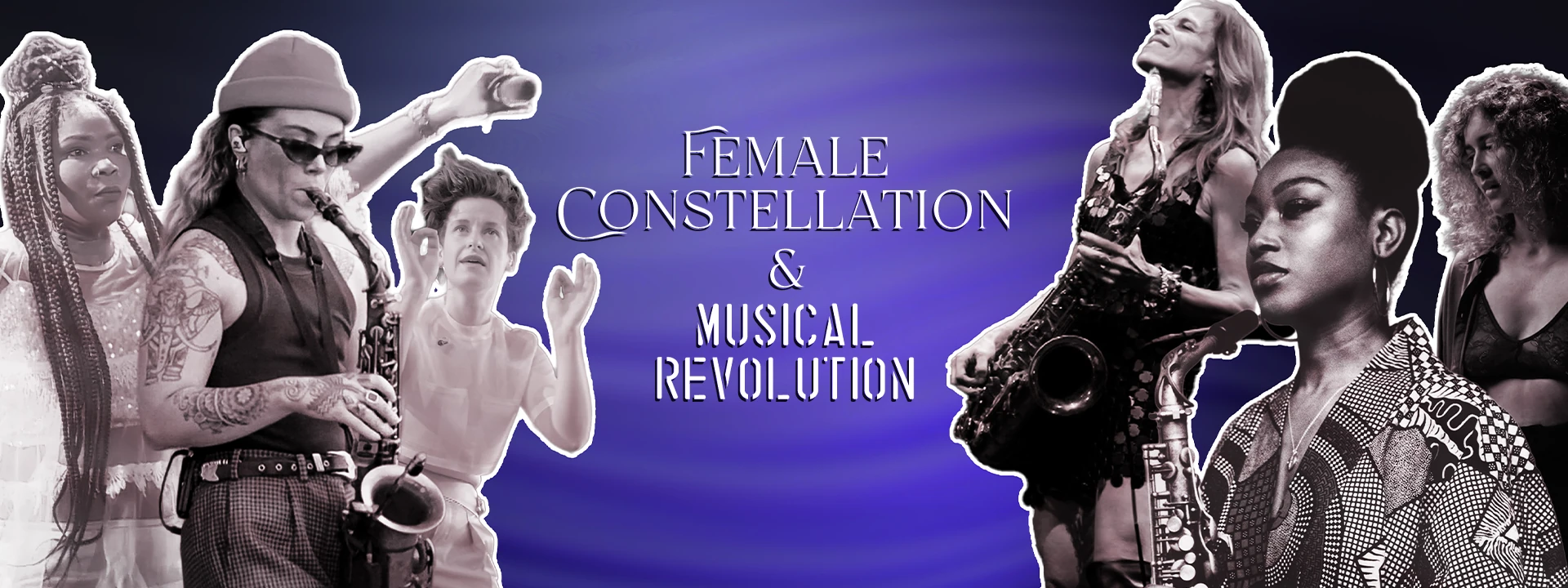
And God Created Woman… and Music
The very word "music" carries a feminine origin: the Muses of ancient Greece, daughters of Mnemosyne, goddesses of memory and the arts. Yet behind this symbolic presence of women in mythology lies a far more ambivalent history. Facing the Muses stand the Sirens, renowned for their musical talent: figures of desire, temptation, danger. Early on, the woman musician fascinated as much as she unsettled. Women were celebrated as poetic incarnations of music, while the real-life musician — the one who spoke up, occupied sonic space, or directed the rhythm — was regarded with suspicion.
And yet women were present at the very origins of Western musical history. Saint Cecilia became the patron saint of musicians, while Sappho, poet and musician from the island of Lesbos, is associated with the harmonic refinement of the lyre. But from the 3rd and 4th centuries onward, female singers were progressively excluded from churches. For a long time, being a woman musician was seen as contrary to the norms of femininity: a woman could be a muse, but rarely a creator or a sonic force. The statistics bear witness to the persistence of this legacy. According to UNESCO, women directed only 30% of the top 50 jazz albums in 2019, and represented just 7.6% of Grammy Award nominations in jazz since 2013. At the 2024 International Jazz Day global concert, only 6 of the 31 artists were women — less than 20%. Among them, a single instrumentalist: saxophonist Lakecia Benjamin.
In the Beginning Were Women and the Blues
In Deep Blues (1991), filmmaker Robert Mugge travels the dusty roads of Mississippi alongside critic Robert Palmer and musician Dave Stewart. Between juke joints and Mississippi fields, Deep Blues portrays a world dominated by male figures. Then one female figure emerges: Jessie Mae Hemphill. Born in 1923, percussionist, guitarist and singer, she plays with an almost organic connection to earth and rhythm. Her very presence is a reminder of a reality too often forgotten: the history of the blues also begins with women.
In 1920, Mamie Smith recorded "Crazy Blues", a massive hit that opened the recording industry to African American artists. In Blues Legacies and Black Feminism (1998), Angela Davis shows how Ma Rainey, Bessie Smith and Billie Holiday wove subtle yet profound forms of resistance into their songs. More than feminism in the contemporary sense, they opened "breaches in patriarchal discourse," giving voice to economic autonomy, female desire, and a freedom unshackled from the norms of their era. This legacy reaches far beyond the bounds of historical blues. Today, artists like Justina Lee Brown carry forward this tradition of powerful women who seize a musical language in order to transform it. The Nigerian singer draws from American blues while opening it up to rock, soul, and funk, claiming a powerful presence on stage and an artistic freedom that places her squarely in the lineage of her predecessors.
The history of popular music tends to remember the names of stars, less so the voices that inspired them. And yet certain musicians have profoundly shaped the contemporary musical imagination. One of the greatest commercial successes of the late 20th century, Moby's "Natural Blues", is built on a sample of "Trouble So Hard", recorded in 1937 by Vera Hall. Born in Alabama in 1902, this folk singer rooted in the African American work-song tradition is a reminder of just how decisive — and how invisible — the imprint of blues women has been on global popular music.
From Intimate Blues to Political Denunciation
In 1939, at just 24 years old, Billie Holiday recorded Strange Fruit, widely considered the first major popular song to denounce racist lynchings in the United States. Inspired by a poem by Abel Meeropol, the text describes the bodies of Black people hanging from trees across the American South. For Angela Davis, Strange Fruit made Billie Holiday a pivotal figure in the new tendency of Black musical culture to confront the question of racial injustice head-on. The singer no longer sang only her own condition: she gave voice to a collective memory and transformed the stage into a space of resistance.
The song was unsettling. Upon its release, Strange Fruit was poorly received in many social circles. Too political. Too uncomfortable. Long before the Civil Rights Movement, Billie Holiday gave voice to what many preferred not to see. But as with the recognition of women in music, the struggle against racist violence unfolds across a long stretch of time. It would take until 2022 for the United States Congress to finally make lynching a federal crime — more than one hundred and twenty years after the first legislative proposals to that effect. According to a text adopted by Congress, at least 4,742 people, the majority of them African American, were lynched in the United States between 1882 and 1968. The vast majority of these crimes went unpunished.
In this context, music emerges as an indispensable voice of memory and resistance, and women often occupy a central place within it. From Billie Holiday to Fatoumata Diawara and Dee Dee Bridgewater, a clear throughline emerges: artists who combine commitment with artistic rigor. The Malian singer speaks out against excision, forced marriage, and violence against women. Dee Dee Bridgewater has long been committed to human rights, education, and the representation of African American artists. What they share goes beyond their causes: both possess that rare alliance between immense musical sensitivity, magnetic stage presence, and the ability to deliver powerful messages without ever sacrificing the beauty of song. Voices that are sometimes gentle, sometimes tender, yet whose force of conviction remains beyond question.
Appropriate Attire Required
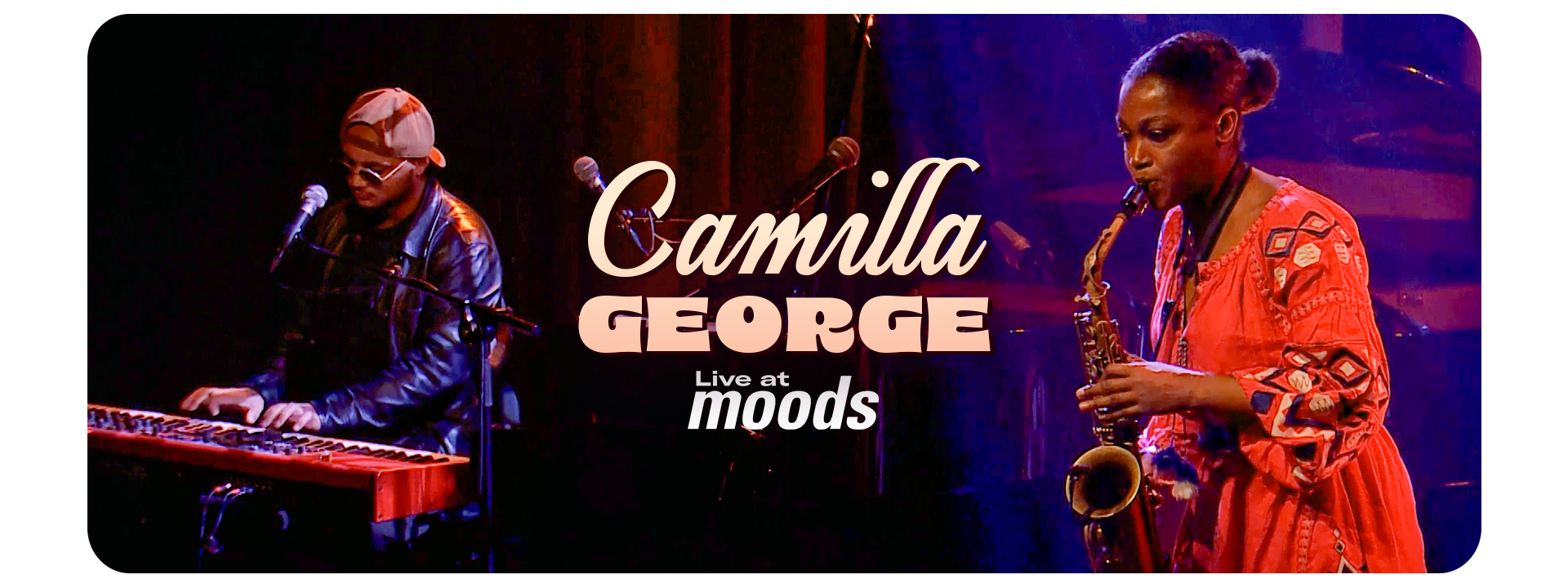
For a long time, being a woman instrumentalist was an act of transgression. Blowing into a saxophone, raising a brass instrument toward the audience, holding a cello between one's legs: these were gestures deemed incompatible with bourgeois femininity. A woman could be a muse; she was not supposed to become a sonic force. The history of the saxophone was written in masculine terms: John Coltrane, Sonny Rollins, Wayne Shorter. And yet the lines are shifting. Today, many women musicians have taken up the mouthpiece as a defiant statement. Lakecia Benjamin makes the saxophone roar at the intersection of jazz, funk, and spirituality. Camilla George infuses it with Afrobeat rhythms and diasporic heritage. Muriel Grossmann builds long modal trances in the wake of Coltrane.
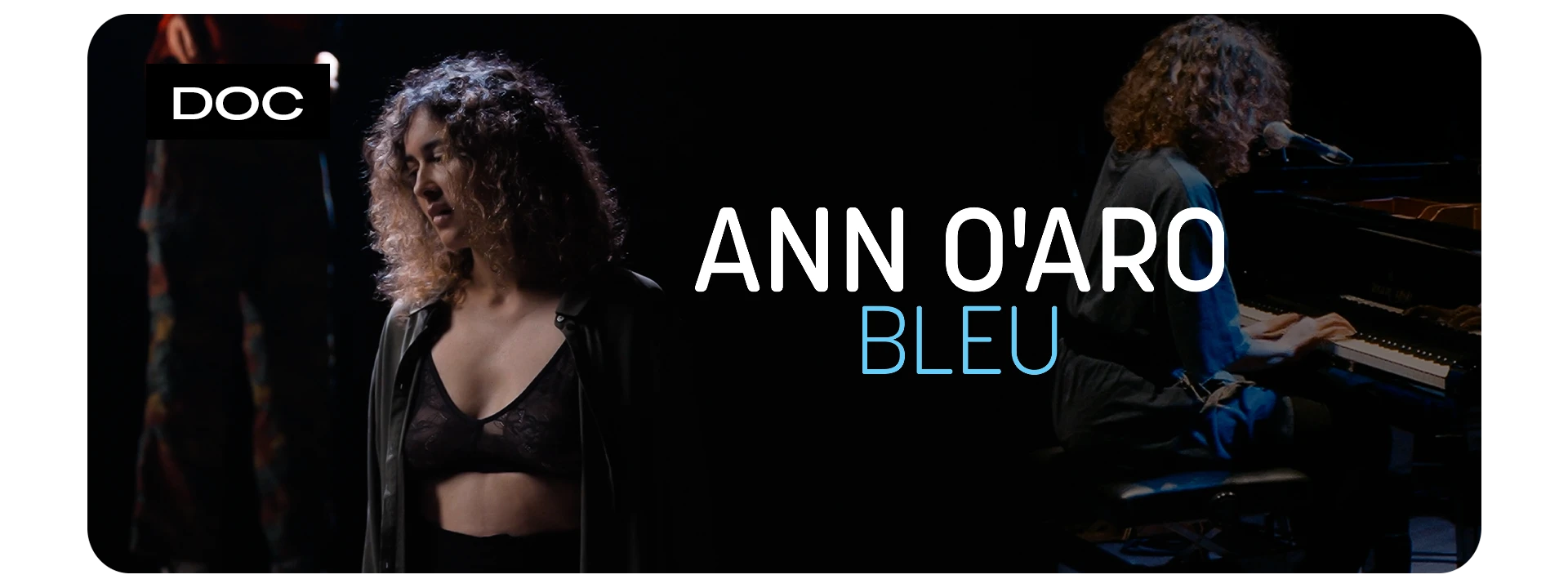
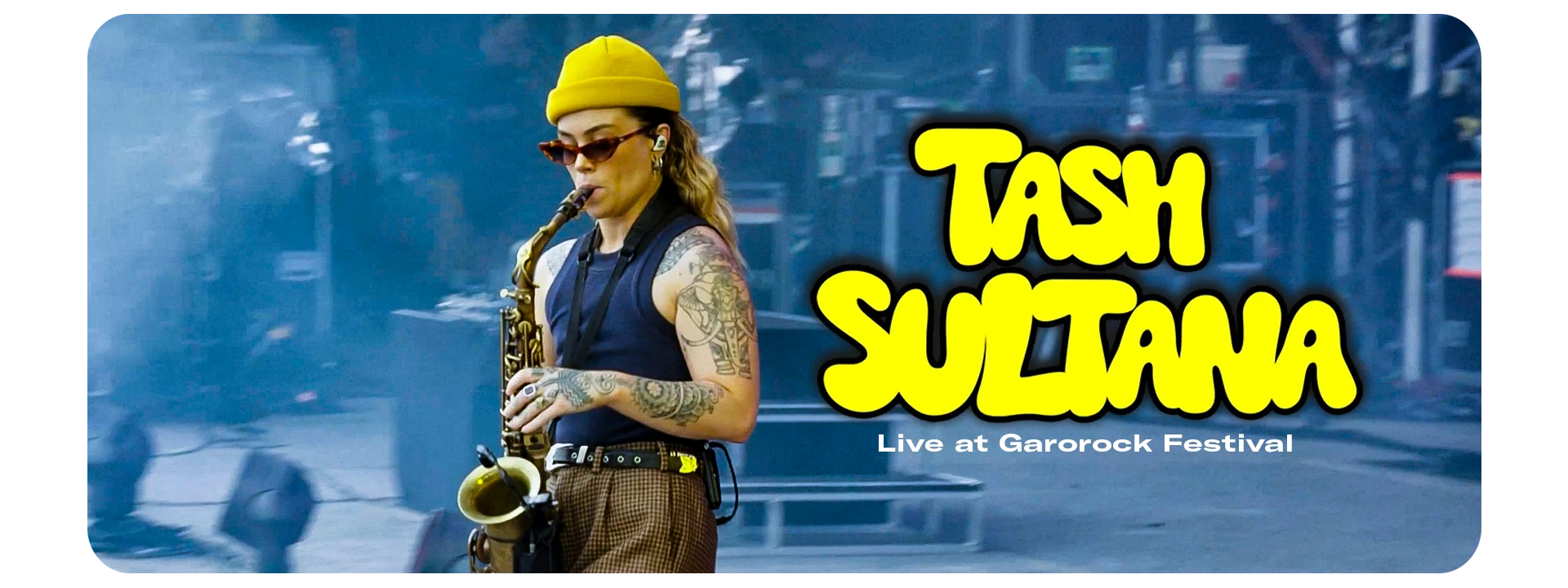
The same struggle plays out in percussion. Though women percussionists were already present in 18th-century Congo Square in New Orleans, they long disappeared from official accounts. Today, they are back at the forefront. Ann O'aro transforms voice and the roulèr into a poetic cry against violence. Lucie Antunes turns percussion into sonic landscapes, moving between minimalism, electronics, and contemporary composition. Tash Sultana shapes the stage alone into a sonic laboratory, blending groove, psychedelic rock, and improvisation.
At the piano too, women have had to claim their place. Long before contemporary instrumentalists asserted themselves on international stages, Mary Lou Williams was already leading the way. A pianist, composer, and one of the major arrangers in jazz history, she moved through the eras of swing, bebop, and modern jazz while maintaining a singular voice. Her Zodiac Suite (1945), reinterpreted in 2023 by the Umlaut Chamber Orchestra, is an ambitious work that weaves orchestral writing, classical influences, and improvisation. Through this composition, Mary Lou Williams proves that women did not merely participate in jazz history — they helped to fundamentally renew its forms. In the 1980s, Tania Maria made her mark with an explosive style in which samba, funk, jazz, and scat respond to one another with brilliance and percussive energy. Today, Rachel Z continues along this path with a virtuosic, boundless approach. A major figure in American jazz fusion, who spent time alongside Wayne Shorter, she blends the legacy of Herbie Hancock and McCoy Tyner with rock, electronic, and pop influences. Her rereading of Coldplay, Nirvana, or Sting become improvisational terrain where the piano no longer accompanies — it leads, constructs, and challenges.
The same energy runs through it all: that of women who no longer ask for permission.
Hypersexualized or Overexposed: the Same Cage
But claiming the stage does not put an end to every obstacle. If women have won the right to play, they are still often confronted with another form of control: the gaze. Amy Winehouse is one of the most striking examples. Where Madonna turned sexual provocation into an artistic manifesto and Beyoncé made female power her banner, Amy Winehouse chose the song. In "Rehab", "You Know I'm No Good", or "Back to Black" (2006), she transformed her flaws, her loves, and her wounds into musical material. And yet her private life often ended up occupying more media space than her work. For years, the British tabloids dissected her addictions, her romantic relationships, her appearance. Like Billie Holiday before her, Amy Winehouse saw her talent regularly eclipsed by the narrative of her own downfall.
The paradox persists. Whether they claim their sexuality — like Madonna with "Like a Virgin" (1984), "Erotica" (1992), or Beyoncé with "Run the World (Girls)" (2011) — or expose their vulnerabilities like Amy Winehouse, women artists continue to be looked at before they are listened to. But front pages fade. Songs endure. Back to Black and "Love Is a Losing Game" still resonate today, proof that behind the media noise, what remains is what matters: a voice which, like those of Ma Rainey, Billie Holiday, or Nina Simone before her, turned the intimate into art and vulnerability into strength.
Cultural Diversity, Beyond Borders
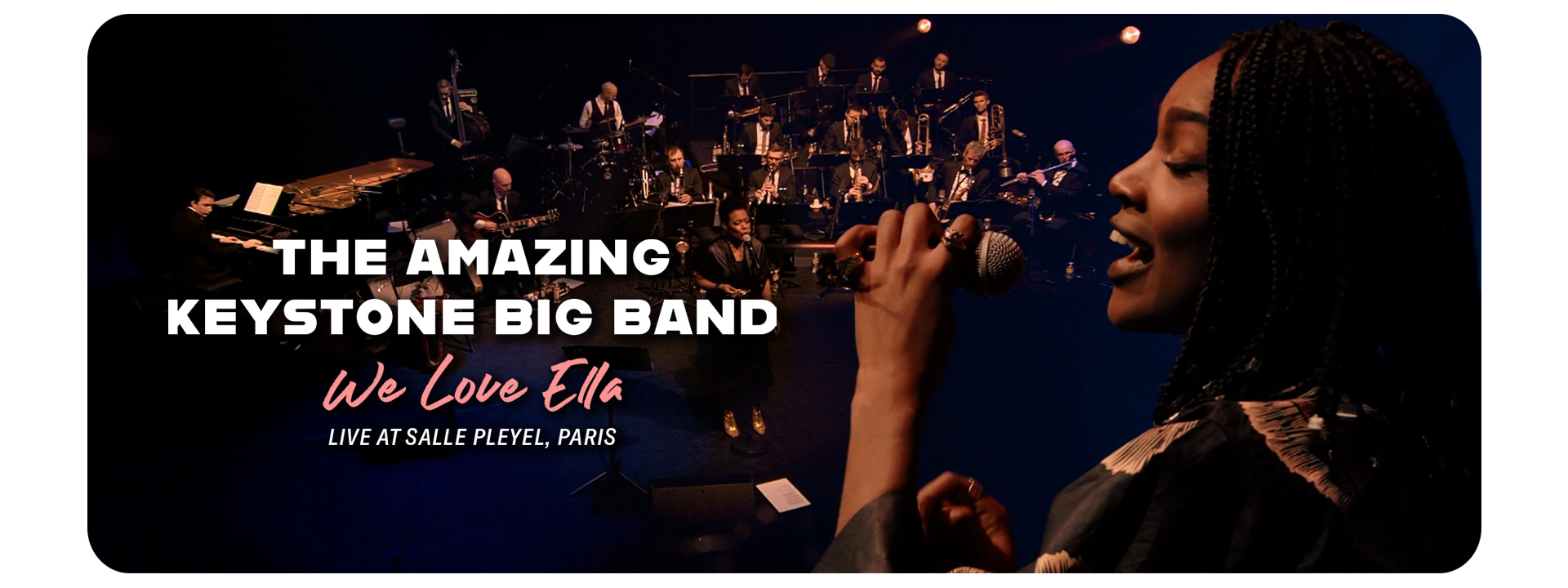
Today, the question is no longer only that of women's place, but of women musicians who have become major artistic references. Esperanza Spalding has reinvented the role of the double bass in contemporary jazz, blending virtuosity, singing, improvisation, and influences drawn from soul, classical, and African American music traditions. Cécile McLorin Salvant draws on jazz vocals, blues, song, and cabaret to build a world of rare narrative richness. In this same spirit of reappropriation and transmission, the We Love Ella project by The Amazing Keystone Big Band revisits the work of Ella Fitzgerald through contemporary arrangements, a reminder of how the repertoire of the great female voices of jazz continues to feed current creation and circulate across generations.
Beyond geographic borders, aesthetics are also blending. Hadda Ouakki sets the Amazigh melodies of the Middle Atlas in dialogue with world music and contemporary improvisation. This circulation of voices and memories is also at the heart of Jacqueline Caux's documentary If I Keep You in My Hair (Si je te garde dans mes cheveux). Bringing together several musicians from the Maghreb and the Middle East, the film shows how artists from often constraining political and social contexts use music to assert their freedom, creativity, and place in public life.
In An Orange Waiting to be Eaten, South African choreographer Robyn Orlin weaves together dance, choral singing, documentary film, and collective memory. Alongside the Zulu choir Phuphuma and singer Camille, she moves through a post-apartheid South Africa still shaped by xenophobia. The voices become at once musical instruments and testimonies. Traditional songs answer back to the archives of the mine dancers, while music becomes a space for dialogue, memory, and sometimes repair. A new generation of artists is thus composing an open feminine cartography, where traditions circulate freely and identity is built less on belonging to a style than on the encounter between several worlds.
Women’s Revolution
The history of women in music is therefore not only a question of artistic recognition. It is a history of movement — of voices that refuse to be silenced, bodies that refuse to disappear, borders that refuse to become barriers.
The word "revolution" itself is illuminating. From the Latin revolutio, it originally referred, in astronomy, to the regular movement of a celestial body around another. For a long time, women in jazz, blues, or soul seemed condemned to this orbital position: visible sometimes, admired often, but kept at a distance from the gravitational center of music. And yet some changed course. They did not simply take their place in the movement: they shifted the very axis around which music turned.
More often than not, women initiate revolutions before those revolutions even have a name. Because they live closest to the constraints, they are also the first to reveal their cracks. In 2022, the death of Mahsa Amini in Tehran — arrested by Iran's morality police for allegedly wearing her veil "incorrectly" — triggered an uprising whose slogan, "Woman, Life, Freedom", echoed around the world. In the streets of Iran, women removed their veils. Elsewhere, artists, musicians, and singers amplified their struggle. Once again, female voices became resonating chambers of history. Perhaps that is their true power. Not simply to sing the world, but to help transform it.
From Ma Rainey to Billie Holiday, from Nina Simone to Fatoumata Diawara, from Tania Maria to Esperanza Spalding, they have not merely performed songs. They have opened paths. They continue this astral revolution, slowly but surely shifting the lines of a universe long conceived in masculine terms. For it sometimes takes the force of a star to change an orbit. And to remind us that the place of women in music is not a question of periphery, but a question of humanity.
By Hanna Kay