By Vincent Caffiaux
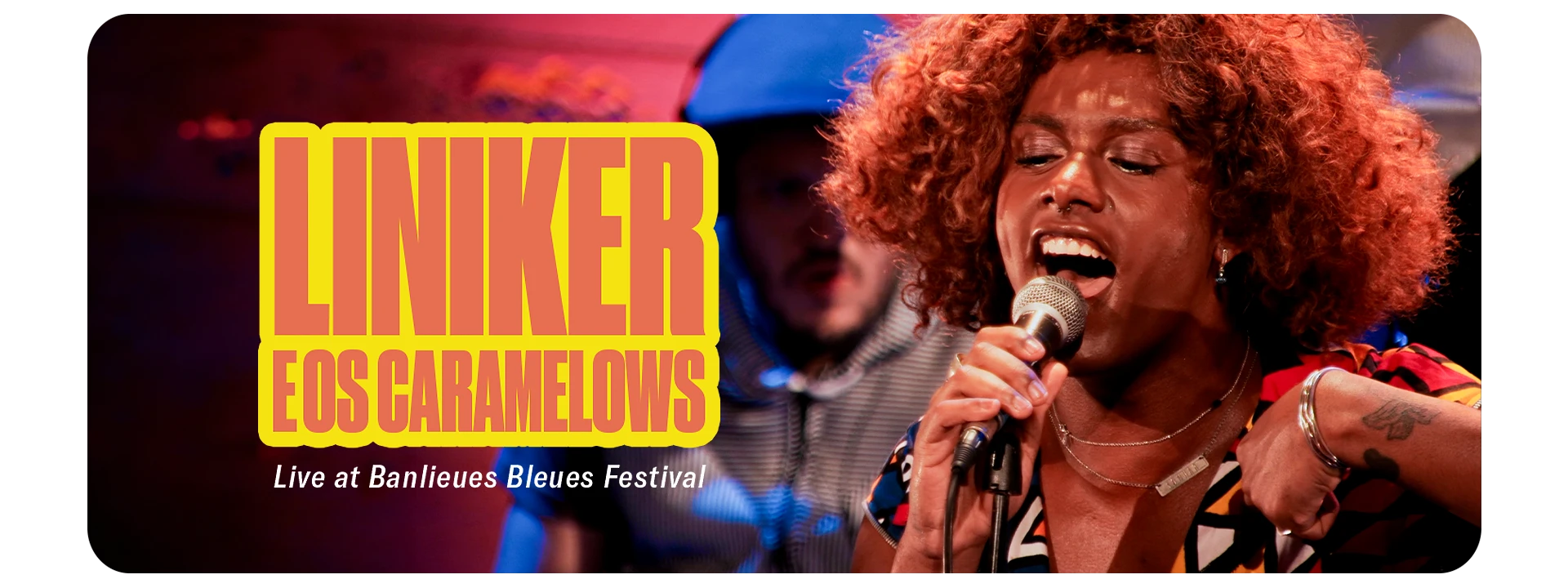
Far from stereotypes, the Creole planets are, by their very nature, multiple. In Kassav, Caribbean culture blends with funk to the point of captivating trumpeter Miles Davis, who saw in the group the local equivalent of Earth, Wind & Fire. From Martinique, pianist Mario Canonge sets jazz in dialogue with Caribbean heritage through sophisticated compositions. The mainland is not left behind, with trumpeter Ludovic Louis. And the Paulistas of Liniker e os Caramelows or singer Luedji Luna offer a mixed and tolerant vision of Brazil, one of Latin America's great cultural reservoirs. In a globalized context where identities multiply, these groups and artists appear as custodians of memory, innovative artistic references — in short, craftspeople of communication between cultures.
African Roots
Beyond their linguistic, geographical, and musical differences, Creole cultures share a common destiny: that of Africa and the Atlantic slave trade. Between the 16th and 19th centuries, European powers organized a vast system of human deportation designed to feed the plantations and colonial economies of the Americas, the Caribbean, and the Indian Ocean. The figures are staggering: between fourteen and seventeen million Africans were torn from their homelands and dispersed across enslaved territories (source: Mémorial de l'Abolition de l'Esclavage, Nantes). On Gorée Island, facing Dakar, the famous "Door of No Return" remains one of the symbols of this history. But other ports played a significant role in the triangular trade — notably Luanda, the hub of Portuguese trafficking toward Brazil, and Ouidah, a vast slave-trading center in what is now Benin.
In this light, the Gulf of Guinea constitutes one of the great Creole heartlands. Through the Atlantic slave trade, African populations naturally brought with them their beliefs — including the Yoruba faith and the mysticism of the vodoun, practices rooted in polytheism and animism. Blended with Christianity over the decades, these religious traditions gave rise to Haitian voodoo, Cuban Santería, and Brazilian Candomblé. In Port-au-Prince as in Havana or Salvador de Bahia, Papa Legba, Obatala, and Xango remain central figures in local ceremonies, songs, and dances. Fascinating in its evolution, this syncretic legacy is naturally reflected in the instruments it has produced — Cuban batá drums, the Réunionese kayemb, or the Brazilian cuica. As embodiments of this spiritual dimension, composers and movements such as Chucho Valdés, Lindigo, or the actors of the Black Rio movement extend this Afro-descendant memory. Meanwhile, as if carried by an irresistible pendulum swing, African creators and festivals — among them the Benin International Musical, the Gangbé Brass Band, and the Vodun Days — now respond, legitimately yet arrestingly, to those centuries of trauma.
The Gwoka
Born on the plantations of Guadeloupe, gwoka culture is at once a music and a form of resistance. Long scorned by the elites and the French administration, this genre — close cousin to Martinique's bèlè — was built from rhythms passed down by African descendants, and notably by the nèg marrons, the runaway slaves. Its beating heart remains the ka drum, fashioned from barrels. Around it unfold song, dance, and collective improvisation. Concretely, gwoka rests on seven rhythms: the léwòz, the kaladja, the toumblak, the padjanbèl, the graj, the menndé, and the woulé. Codified, each of these tempos is associated with specific social or emotional functions. This music accompanies popular celebrations, social struggles, and more intimate ceremonies such as funeral wakes. It is not limited to entertainment but constitutes a communal and political language in its own right.
From the 1970s onward, gwoka underwent rehabilitation through artists such as Guy Konkèt, Érick Cosaque, and the early incarnation of Kassav — with its knowing nod to the cassava flatbread. These musicians claimed a strong Antillean identity and opened gwoka to jazz, to African music, and to contemporary experimentation. Today, names such as Célia Wa — both solo with the beautiful Fasadé and with ExpéKa — or Magic Malik and his emblematic project Ka-Frobeat, carry this legacy forward by weaving centuries-old contributions with modern creation. Inscribed since 2014 on UNESCO's Intangible Cultural Heritage list, this culture of resilience stands as a major expression of the African diaspora in the Caribbean, capable of influencing music scenes the world over. Proof lies in the connection forged in the 2000s by American saxophonist David Murray, in his jazz quest, with the Gwo-Ka Masters.

New Orleans
Located at the mouth of the Mississippi River, New Orleans is — sometimes forgotten — one of the great Creole territories of the American continent. Founded by the French in 1718, then administered by Spain before being sold to the United States in 1803, the city has been shaped by successive musical currents. At Congo Square, as early as the 18th century, enslaved people were permitted to gather on Sundays to dance and play percussion — instruments otherwise forbidden on the nearby cotton plantations. Since then, this site has become a major laboratory where African rhythms, Creole songs, and European scores converge. Legends such as Louis Armstrong and Jelly Roll Morton inherit directly from this culture. On the ground, jazz dialogues with brass bands — the fabulous Soul Rebels or the New Breed Brass Band — with the voodoo preachings of the extraordinary Dr. John, in contact with the sophisticated funk of Allen Toussaint or the Neville Brothers, and extending all the way to bounce — that unbridled, popular take on hip-hop.
Popularized by the acclaimed television series Treme — named after the historic neighborhood of the Big Easy — the community of Black Indians, or Mardi Gras Indians, expresses the surrounding mosaic with particular force. A tribute to the fugitive slaves once welcomed by the Native American tribes of the bayou, these groups come together every year at carnival time in striking parades of beads and feathers. Far from clichés and stereotypes, this celebration is embodied by Cha Wa, an ensemble that powerfully blends rhythm and blues with an authentic Native American folklore of the Deep South. Finally, as a paragon of this hybrid dimension, a collective like Nola Is Calling synthesizes the new tendencies of the Crescent City. Produced by the excellent David Walters, this album with the feel of a live performance brings together Beninese rhythmist Bonaventure Didolanvi and MC HaSizzle. Creative and unprecedented, this experience is extended by Call & Response, a documentary directed by Arno Bitschy and Élodie Maillot, exploring this seminal vocal technique.
Kassav / An-Ba-Chen'n La
In Pointe-à-Pitre as in Fort-de-France, writers such as Aimé Césaire — one of the founders of the Négritude movement — as well as Édouard Glissant, Maryse Condé, and Raphaël Confiant have extensively explored Creole identities, social fractures, and the past that accompanies them. Devoted to orality and often politically engaged, these authors have written forcefully about island life (read the fantastic saga Texaco by award-winning Patrick Chamoiseau, with its breathtaking syntax) as well as sometimes forced exile in mainland France. Brilliant intellectual figures, they had an evident influence on a strand of Creole song — at the very least its naturalist sensibility — and on performers such as Super Combo with the powerful Moin Domi Dewo, or the supergroup Kassav and An-Ba-Chen'n La.
Powerful, the ambassadors of zouk portray a cruel reality. Behind the festive surface — the cascading keyboards, the contagious up-tempo rhythm — lies the daily existence of the working class. A subtle testimony, An-Ba-Chen'n La plays the card of the extended metaphor. Beyond slavery and deportation, the track can also be read as a veiled critique of the BUMIDOM — a public program presented in the 1960s as a solution to unemployment in the French overseas territories: "Very often we leave, far from home / We take our music everywhere. / It is time the world knew / That the Antilles exist / And that it is love that guides us / On our skin there is the sun / In our hearts there is the drum / Cassava flour, coconut and warmth / It is time the world knew / That the Antilles exist." A perfect integration of zouk with difficult themes such as social condition, this track by Patrick Saint-Éloi, released in 1985, takes on the air of a declaration.
Danyèl Waro & Ann O'Aro
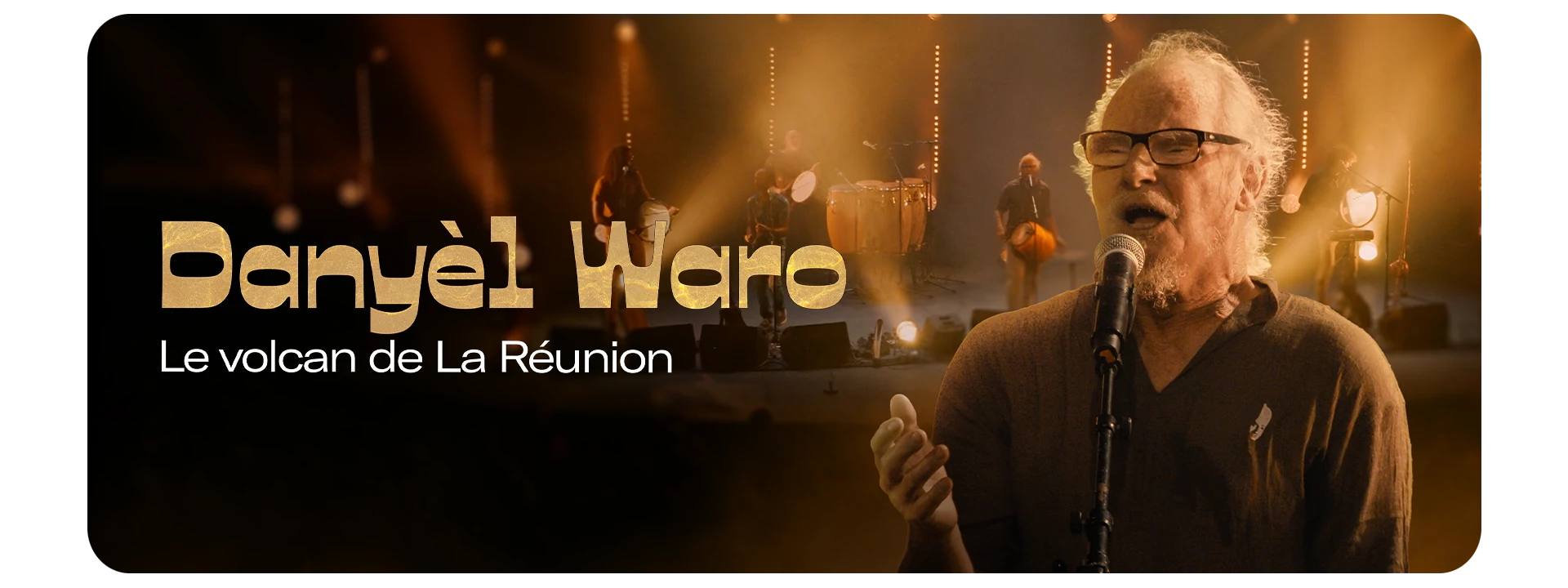
Long banned in Réunion for its association with independence movements, maloya nevertheless survived thanks to strong personalities. Among its heralds, Danyèl Waro occupies a decisive place. From the 1980s onward, he imposed an acoustic yet urgent style driven by the roulèr and the kayamb — percussion instruments endemic to this part of the Mascarene Islands. Certain tracks, such as the vibrant Batarsité or his cover of Georges Brassens' La Mauvaise Réputation, reveal an indomitable temperament. Bound to strong African roots, the singer denounces slavery and its inherent alienation, in favor of Creole dignity. Striking, his taut, almost incantatory voice literally transforms each piece into an act of militancy.
Emerging some decades later, Ann O'Aro sets herself somewhat apart from the Afro-Malagasy universe. Discovered by Philippe Conrath, the founder and creative force behind the Cobalt label, she extends the spirit of maloya while opening it toward a more intimate and contemporary expression. Where the formidable Danyèl Waro is rooted in a collective defense of Réunionese identity (listen to his duo with South African rapper Tumi), the deeply moving Ann O'Aro takes on an existential dimension through the lens of violence against women and personal wounds. Sometimes close to a cry, her singing weaves together poetry, theater, and ancestral rhythms with intense force.
Revealing, the intertwined destinies of these two artists illuminate the evolution of maloya. Fundamentally militant, this music has been able to evolve into an internationally recognized art form, through figures such as Kaloune or Maya Kamaty — daughter of Gilbert Pounia of Ziskakan. These temperaments remind us that maloya was born in pain, that of slavery and colonial domination. And yet these artists also prove that this scene remains a space of creation and freedom: in Danyèl Waro as in Ann O'Aro, maloya is sung and therefore remains standing — definitively.
Champeta and Picós
An alternative to the hugely popular cumbia or the marimba music of the Pacific coast, la Champeta reigns supreme along the Caribbean coast of Colombia. Broadcast through the picós — those gleaming sound systems akin to Jamaican setups — this repertoire testifies to the proximity between Africa and a large part of South America. Based in Barranquilla and Cartagena de Indias — cities marked by the slave trade (the nearby mountain community of Palenque de San Basilio is a historic site of marronage) — this crucible blends Latin melodies with African music in a combustible manner: highlife, Congolese rumba, and its modern counterpart, soukous. Selected by DJ Edna Martinez for the British Soundway catalogue, an excellent anthology devoted to these mobile sound systems mixes in passing the legendary rumberos of Zaïko Langa Langa with gems including São Toméan artist Pedro Lima and his slightly languorous Lusophone melodies.
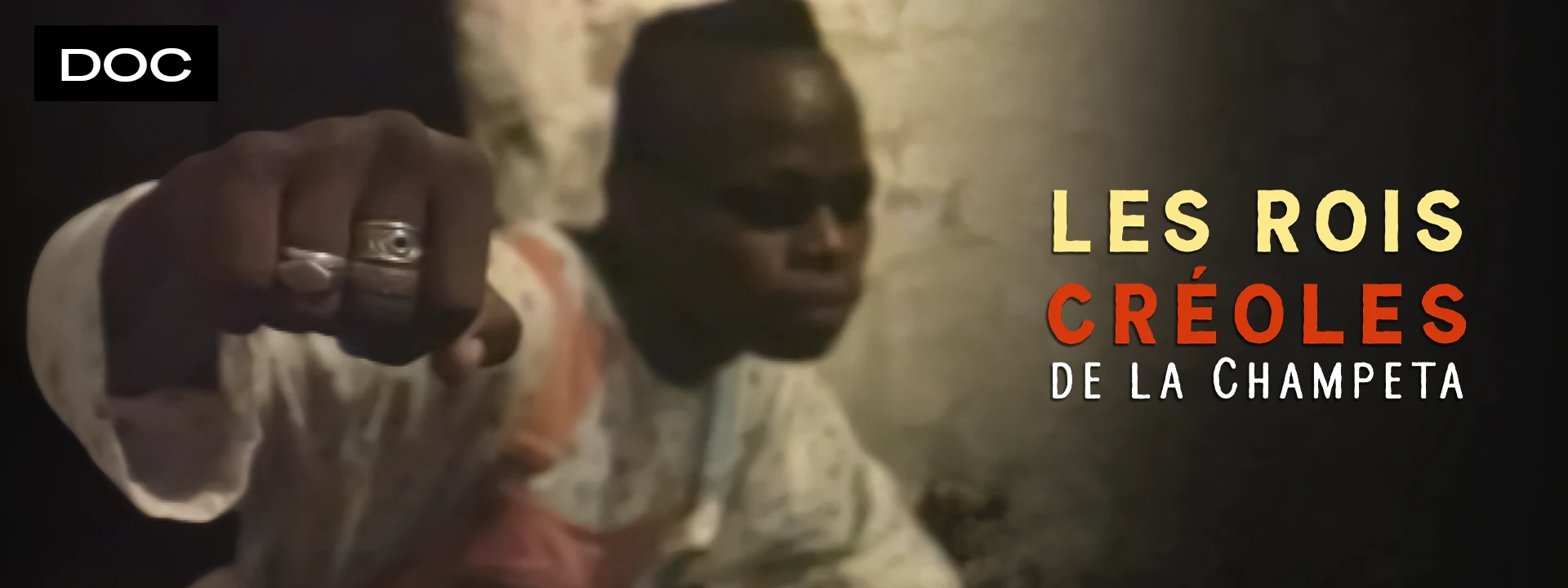
Directed by DJ and producer Lucas Silva — a leading figure in phonographic publishing in both Colombia and France — and by filmmaker and anthropologist Sergio Arria, the documentary Les Rois Créoles de la Champeta carefully traces this ultimately recent movement. Brought back by sailors returning from Africa (one can never say enough about the function of port cities, whatever the genre in question), various dance traditions were absorbed into the working-class neighborhoods of this narrow South American coastal strip, through contact with Afro-descendant populations. Populated by different generations and urban styles — including rap and dancehall, which ultimately makes sense — this culture diffused on the asphalt powerfully embodies the theory of the Black Atlantic, as developed by British sociologist Paul Gilroy in his analyses spread across both sides of this maritime spine.
By Vincent Caffiaux